PIP Cuts Will Hurt Disabled Students – How You Can Take Action
03/04/2025Disabled Students UK (DSUK), the UK’s largest disabled student organisation, are proudly launching the findings from our Annual Disabled Student Survey (ADSS) in partnership with the Snowdon Trust. For the third consecutive year, over 1,000 disabled students from over 100 universities have completed our survey generating wide-ranging evidence on the experiences of disabled students. The 2025 Access Insights Report is the largest research into Higher Education accessibility in the UK. The findings offer crucial insights into persistent barriers in higher education that require urgent attention as well as current progress.
Key Findings
1. Support agreed does not mean support delivered
2. Fewer students are receiving support plans
3. Pandemic-era accessibility is being rolled back
4. Physical access and accommodation remain major barriers
5. Administrative burden is itself a barrier to access
6. Escalation and complaints processes are not safe or effective
7. Culture has improved faster than systems
A disabled student respondent writes: “That repeated exposure — of disclosing vulnerabilities and trying to convince others my difficulties are real — is exhausting, humiliating and, at times, traumatic. Having an advocate or consistent point of contact to do this on my behalf would make a huge difference.”
The report shows that while disabled students’ overall satisfaction with university continues to improve, significant access barriers remain and continue to disrupt students’ studies. One in five disabled students has switched course, interrupted their studies, or left their institution in the past specifically due to inaccessibility. Support from Disability Services remains highly valued when accessible, but a smaller proportion of disabled students are now accessing formal, personalised support, with a decline in the proportion of students with support plans compared to previous years.
Progress in anticipatory accessibility is uneven. The report highlights gradual improvements in inclusive course design and digital accessibility, alongside persistent barriers in assessment, physical access, and distance access to teaching. Weak escalation routes and fragmented responsibility mean that many access failures go unresolved, placing the burden on disabled students to chase support or absorb harm.
- 63% of disabled students have gone without some adjustments because chasing them up repeatedly takes too much time and energy
- 20% of disabled students report having been made to feel unwelcome by university staff due to their disability
- 47% of disabled students who need accessible student housing have had to pay extra
A disabled student respondent writes: “True inclusion requires more than policy; it demands cultural humility, a willingness to listen, and the courage to think differently about what it means to learn, to know and to belong.”
Another respondent writes: “I would have disclosed my suspected disabilities much earlier if someone had explicitly asked me – I wanted to tell people, but was scared to bring it up because I didn’t know whether I would be judged or dismissed for mentioning it.”
Mette Anwar-Westander, Founding Director of Disabled Students UK (DSUK) comments
“For the third year running, this survey has given disabled students a powerful platform to speak honestly about their experiences of higher education. This year’s results show both meaningful progress and persistent gaps: students recognise the dedication of staff in under-resourced contexts, yet too many still encounter fragmented systems and a culture that treats their access as optional. The impact of these findings is clear: when institutions listen, invest, and act cohesively, experiences improve. Our launch event with an expert panel is an opportunity for university staff and decision-makers to engage directly with this evidence, learn what disabled students are really asking for, and be part of shaping a more inclusive, sustainable future for the sector.”
What Needs to Happen Next
Alongside the UK-wide findings, the report includes long-term goals for 2033 and institution-level snapshots where sufficient data is available, supporting universities to understand their position and identify priorities for action. The evidence does not point to a need for further consultation. It points to the need for action. Institutions should prioritise:
- Making delivery of agreed support non-negotiable
- Creating dedicated capacity to coordinate and monitor universal design
- Reducing administrative burden as a matter of access
- Resourcing Disability Services to advise rather than compensate for inaccessible systems
- Making escalation safe, visible, and effective
- Assigning clear senior ownership and governance
- Protecting progress in times of financial pressure
- Measuring what matters
A disabled student respondent writes: “The blatant disregard for the Equality Act 2010 and the institution’s Public Sector Equality Duty is not merely an oversight — it is institutional discrimination. Where is the accountability? Where is the leadership upholding inclusion as more than a performative statement?”
Another respondent writes: “Small changes in attitudes and awareness could have a huge impact on students like me.”
Why This Report Matters Now
The 2025 Access Insights Report is released at a time of significant pressure across the higher education sector. Higher Education Providers are operating under significant financial strain, managing rising demand and navigating heightened regulatory scrutiny. In this context, there is a temptation to see accessibility as something that must wait for better conditions. The report shows why that approach is both risky and wrong.
Sector Relevance & Wider Policy Context
The choices institutions make now will shape disabled students’ experiences for years to come- and will also impact institutional risk and reputation. In a time of constraint, the most sustainable path forward is not retreat, but focus:
- reducing administrative burden
- designing inclusively
- delivering what is agreed
- holding systems to account
This report is not a snapshot to acknowledge and file away. It is a call to action. Disabled students have been clear about what needs to change. DSUK urges leaders, regulators and practitioners to use this report as it is intended: as a basis for action. The responsibility to act now lies with institutions.
Launch Event
DSUK were joined by expert panelists for an engaging discussion. The recording is available on our youtube channel and website. Our expert guest speakers included:
- Helen Saelensminde – Chief Executive of Snowdon Trust
- Professor Deborah Johnston – Deputy Vice Chancellor (Academic Framework) at London South Bank University
- Suzanne Carrie – Head of Student Equality and Welfare at the Office for Students
- Jim Dickinson – Associate Editor (Student Unions) at Wonkhe
Access Insights Membership
Recommended by the Disabled Student Commitment (DSC), Access Insights Membership enables institutions to receive detailed, institution-specific insights drawn from the survey, supporting targeted action to improve disabled students’ experiences. Membership involves a financial contribution that supports the delivery and sustainability of the survey and related research. Participation in Access Insights Membership does not influence survey design, analysis, or findings, which remain independent and led by disabled students.
Membership supports institutions to:
- better understand patterns in disabled students’ experiences
- prioritise interventions that are more likely to be effective and cost-efficient
- reduce reliance on reactive, ad hoc adjustments
- support staff to act with greater confidence and consistency
This can improve both student experience and staff workload, by reducing repeated access failures and crisis management.
More info about membership can be found on our website.
About Disabled Students UK (DSUK)
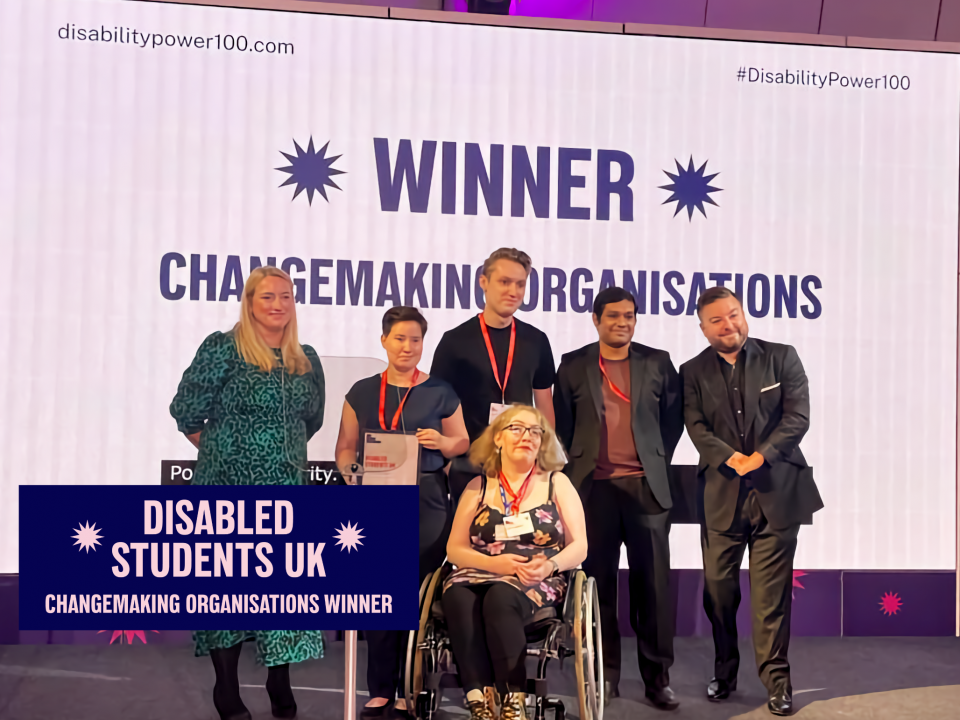
Disabled Students UK (DSUK) is the UK’s largest disabled student-led organisation. DSUK has been recognised three times by the Disability Power 100 as one of Britain’s most influential disabled-led organisations, including winning the Changemaking Organisation category in 2023. DSUK brings together over 600 current and former disabled students from more than 80 UK higher education providers to ensure disabled students’ lived experience informs policy and institutional decision-making.
DSUK supports institutions and policymakers to improve accessibility and reduce systemic barriers in higher education through research, training and advisory work. Known for its evidence-based approach, DSUK’s research has been cited in Parliament and widely used by higher education providers to inform practice.